
What is mental health? Is it a diagnosis? A label? Or how stressed you feel? Mental health can mean all these things, or none of them. At its core, mental health is how we think, feel, and act. It’s not fixed. It changes throughout our day, week, and lifetime. How we take care of our mental health can also be small practices or larger gestures. Mental health and mental wellness can be used interchangeably, but these terms are not synonymous with mental illness.
When people hear “mental health,” they often think it means “mental illness.” But they’re not the same.
- Mental health includes our emotions, relationships, beliefs, and stress management.
- Mental illness is a health condition just like diabetes or asthma, that can affect mental health.
Both deserve attention, and neither should carry shame or stigma.
Mental health encompasses our emotions, actions, beliefs, relationships, and ability to handle stress. Using intentional language when addressing our mental health can further reduce stigma and improve our conversations about mental health. How often have you heard a story about someone having a strong reaction to a situation and the person will say, “they were acting crazy…?” When we use pejorative terms to describe a person’s reactions or emotions we are creating shame around mental health.
Let’s address how we can use a positive perspective to speak about mental health.
First, let’s talk about how we speak about mental health diagnoses. When someone is diagnosed with a mental health condition, it does not define their future or who they are as a person. Like any medical diagnosis, it provides insight into strengths and challenges a person may face. Think of it this way: if someone loses their eyesight, they may experience a heightened sense of hearing. Mental health conditions can create a similar shift. For example, a person living with post-traumatic stress disorder (PTSD) may face challenges related to hypervigilance or emotional regulation, but they might also demonstrate incredible resilience, quick decision-making skills, and heightened empathy.
Treatment for mental health conditions should be viewed just like treatment for physical conditions. People managing diabetes or cancer are expected to take medications and follow care plans to maintain their health. In the same way, managing mental health with medications, therapies, and coping strategies is crucial for long-term well-being. (Source)
Let’s take a step back and look at mental health in a less formal setting. Our mental health impacts us every day. Think back on a time when something frustrating happened first thing in the morning. How did this impact the rest of your day? Were you able to laugh off the frustration, or perhaps you found it magnified other minor inconveniences. Do you find you have a typical reaction in these situations? Most likely the response to these events will vary based on other aspects of your mental health. For example, if you didn’t get adequate sleep the night prior, a spilled cup of coffee may elicit a surge of emotion. However, after a good night’s sleep a spilled cup of coffee may feel like a minor inconvenience from which you can easily bounce back.
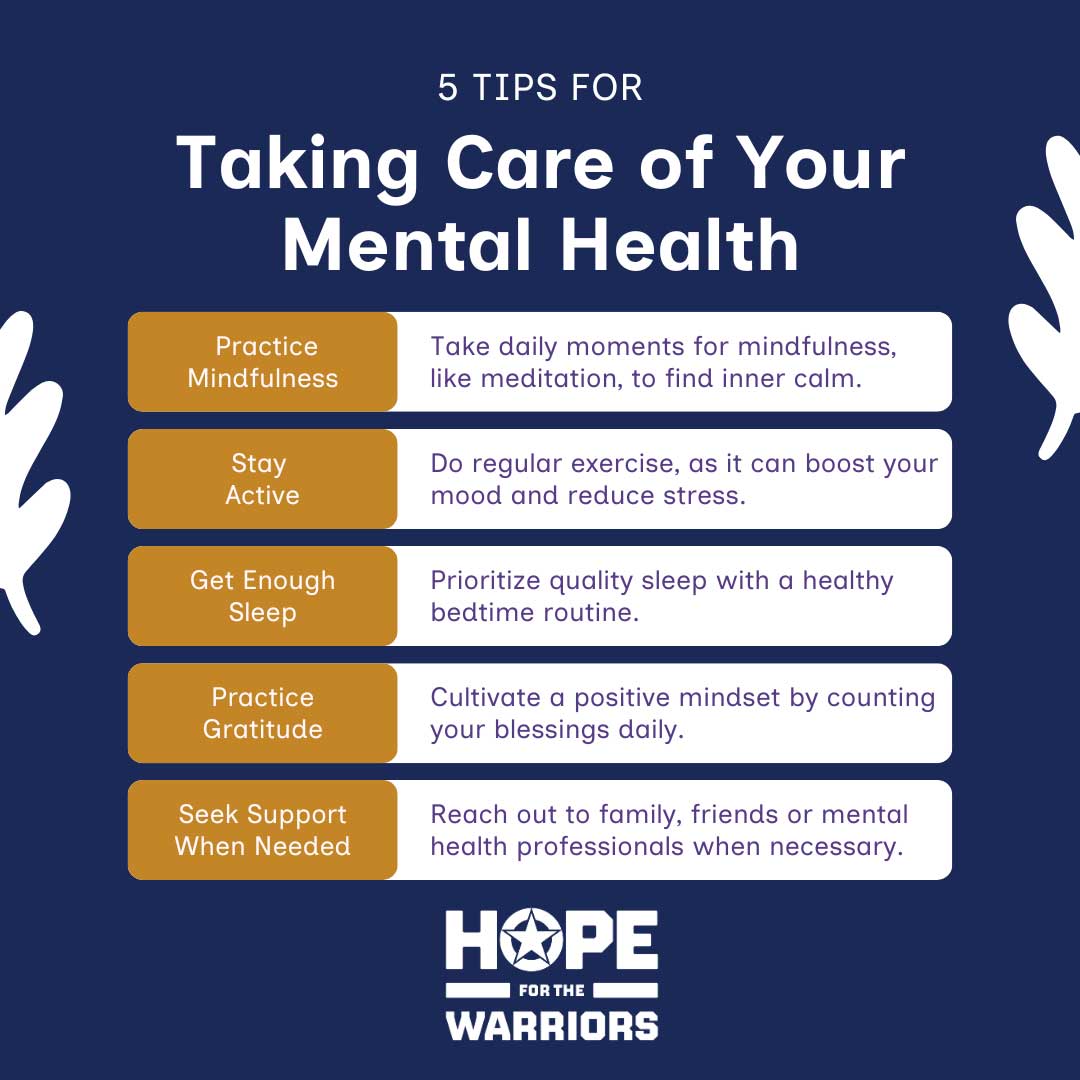
Taking care of our mental health is critical to our overall well-being. Factors of mental health include sleep hygiene, physical activity, stress levels, and social support to name a few. There are simple practices we can do every day to take care of our mental health. Sleep hygiene, getting adequate sleep every night, is important to give our brain time to rest and recover each day. Our brain needs this time to process and store memories and information from the day. Likewise, physical activity is important because it creates endorphins and can improve your mind-body connection. Stress, if not managed, can create short-term and long-term health issues. Research shows that social support repeatedly improves mental health.
Now that we’ve identified some key factors in mental health let’s look at simple ways to improve our mental health. We may find when we feel overstressed, we have difficulty falling asleep. Taking time to practice journaling prior to bed can be a convenient outlet to off-load stressful situations or feelings. Another way to counter our stress can be simple mindfulness or meditation practices at bedtime.
Physical activity does not need to be vigorous or occur for long periods of time. Scheduling time for a daily walk can greatly improve your mood and boost your mental health. Everyone experiences stress making it unavoidable. Taking time to practice simple stress reduction techniques can abate chronic stress illnesses. Practicing gratitude is a simple exercise to reduce stress. Gratitude practices shift your focus to positive aspects of your life and interrupt negative thought loops that can occur when experiencing stress. Social support can include friends, family, community, and even information. Seeking support through our social circles provides a sense of belonging, influence, and connection.
Caring for our mental health improves our emotional well-being and can create protective factors for our overall well-being. Protective factors are positive social determinants in our lives that reduce our risk for physical ailments, negative life experiences, and even suicide. A common myth surrounding suicide is that only those with a mental health diagnosis are at risk for suicide. Research has found 54% of those who died by suicide had no diagnosed mental health condition (Source) Taking small steps every day to address mental health can be effective but more formal support such as therapy may be needed.
At HOPE, we have partnered with the GUIDE App to provide memberships to our staff, service members, veterans and family members to provide daily support for mental wellness. Not only does The GUIDE App provide support for emotional well-being, but also other areas of well-being such as physical well-being, financial well-being, relationship support and more content focused on whole well-being. The GUIDE app completed a 30-day clinical trial with the support of UPenn and found use of the app increased motivation by 15%, an 11% increase in joyfulness, and 28% felt they had a better understanding making progress towards their well-being goals. These improvements only required about 15 minutes of dedicated time in The GUIDE app to complete well-being activities, proving that small steps for well-being can be thoroughly effective. (Source)
Our mental health will change throughout our lifetime. Different life events can create different stressors, and we may find our previous coping skills are no longer effective. Just like getting routine physicals for our physical health we should take time to check-in on our mental health. Some simple ways to do this can include keeping track of your stress levels for a short period of time, taking notice to your body’s physical state, reflecting on your current level of happiness, and taking inventory of areas in your life you wish to improve.
Real Stories of Hope: Dustin Gruwell

Mental health challenges can feel isolating, but it’s important to remember there is strength in seeking help. Navy veteran Dustin Gruwell is a powerful example. After facing mental health struggles during his transition from military service to civilian life, Dustin realized he couldn’t do it alone. He found support financial support through HOPE’s Critical Needs program, and employment assistance through HOPE’s Warriors Compass program
“I’m in full-blood recovery. I’ve got my mental health somewhat under control. I still have a long way to go, but I know I can never go back.” – Dustin Gruwell .
Dustin’s journey reminds us that mental wellness is not about avoiding struggles, it’s about having the tools and support to overcome them. Today, Dustin’s story reminds us that healing is possible when we invest in our mental health and reach out for support.
At Hope For The Warriors, we believe that taking care of your mental health is just as important as taking care of your physical health. Whether you are seeking daily tools to support your well-being or need more personalized care, HOPE is here to help. Through resources like The GUIDE App and our Clinical Support Services, we provide support to service members, veterans, families, and caregivers every day. If you’re ready to take the next step in prioritizing your mental health, reach out. You are not alone. HOPE is here. Learn more at hopeforthewarriors.org.