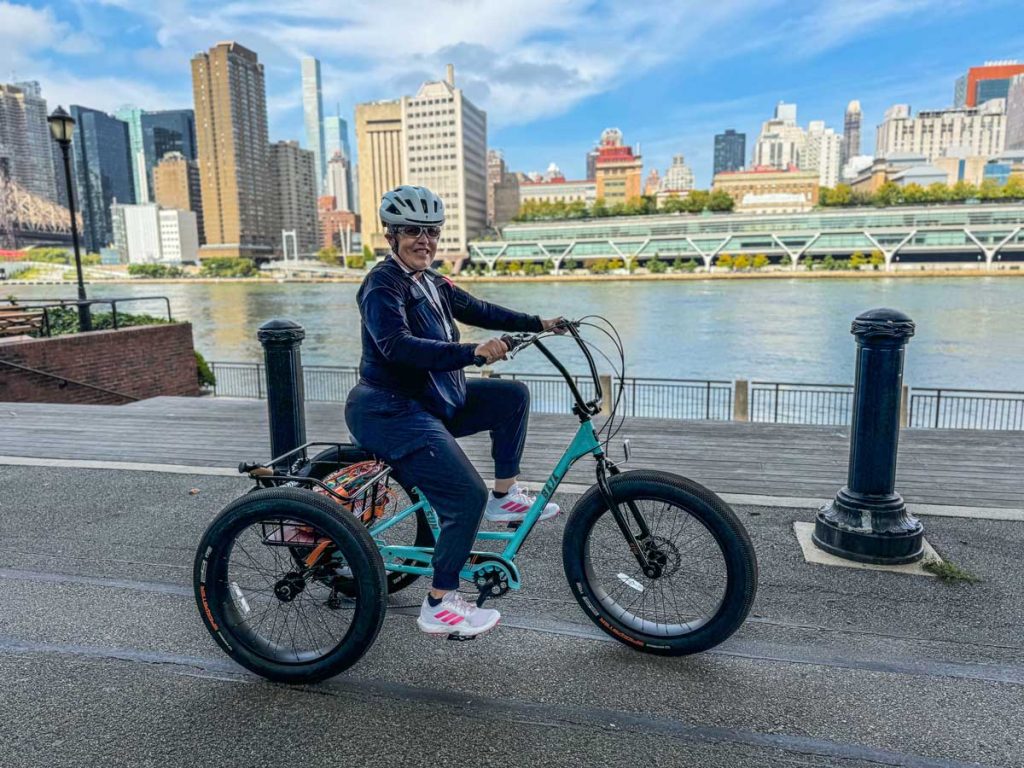
It was a full-circle moment for Michelle. On September 11, 2024, she took the ferry across the Hudson River, her new adaptive tricycle in tow—a piece of equipment she now needs because of injuries sustained in the war sparked by the events of September 11, 2001. Michelle docked in New York City after riding past the World Trade Center and 9/11 Memorial Museum, paying her respects for all the lives lost. “It was a sign,” she said.
 Michelle began her military career in the Navy Reserve before transferring to the U.S. Army, serving for four years during the surge. Initially, she intended to make the military a long-term career, but after suffering three traumatic brain injuries (TBIs), her plans changed dramatically. These injuries led to long-term rehabilitation, which involved intensive polytrauma services in the clinic, at home, and in the community through the VA in Manhattan.VA New York Harbor in Manhattan and the Wounded Warrior Project Independence Program.
Michelle’s journey hasn’t been without setbacks. In 2022, she was diagnosed with colon cancer, a common illness among post-9/11 veterans. The diagnosis came as a shock, especially since she had no symptoms, and it forced her to put her brain injury rehabilitation on hold. The cancer treatments took a toll on her body, exacerbating some of the effects of her traumatic brain injuries. Despite this challenging detour, Michelle remained resilient, staying focused on her long-term recovery goals. After beating cancer, she was able to resume her rehabilitation, determined to regain as much independence as possible.
Michelle was referred to Hope For The Warriors as part of her rehabilitation, where she found support for her adaptive sports journey. A critical challenge she faced was acquiring specialized equipment, including 2 sets of safety-rated goggles for water and land sports, a MiPS-rated helmet, and a stability tricycle that catered to her specific needs as a brain injury survivor. “These were small obstacles, but they prevented me from moving forward,” Michelle explained. The goggles with specialized prescription allowed her to regain peripheral vision and turn her head in any direction, essential for participating in sports like weightlifting, swimming, basketball, and even yoga. “I’ve spent 14 years seeing the world in a narrow way. Now, I can see like a regular person with the goggles,” she said.
Michelle also discussed her difficulties in finding an adaptive tricycle that met her needs. Most providers offered hand cycles or recumbent tricycles, which weren’t suitable for her. Hope For The Warriors stepped in, and soon Michelle had the tricycle she needed to embark on her new cycling adventures. “Since I got it, I’ve already been on three bike rides,” she said with excitement. What really shocked Michelle was how quick and easy the process was through HOPE. “Some places, there’s a lot of talk, not much action. And that’s frustrating for me,” she explained. “Everyone [with HOPE] has been like, ‘Let’s find a solution.’ It probably took 30 days from when I applied for services to have the goggles in my home.”
Peer support has been a vital part of Michelle’s healing process throughout her recovery. She been connected with Carli Wilson from the Hope For The Warriors Military Relations team, who introduced her to peer support groups, including sessions specifically for women veterans. She’s also been connected with the local NYC Peer Support team for in-person, local events and Jenna McDonald from the Physical Health and Wellness team for local adaptive sports. These groups provide Michelle with a sense of community and belonging and will become an essential source of strength, helping Michelle navigate the ups and downs of her recovery.
Reflecting on her rehabilitation journey, Michelle emphasized how transformative Hope For The Warriors has been in her life. “HOPE lifted me over the barriers,” she said, “and it’s been amazing to see the progress I’ve made in such a short time.” For Michelle, adaptive sports are more than just physical activities; they are a path to reclaiming her independence and moving forward with community reintegration and rehabilitation outside the clinic. From practicing yoga and weightlifting with her new goggles to riding her adaptive tricycle and swimming, she is rediscovering the joys of life in a faster and more fulfilling way. “It’s empowering,” she shared, “because I’m not just overcoming obstacles in sports, but also gaining autonomy in my daily life.” For example, her tricycle now allows her to take trips to the grocery store—something she hadn’t been able to do on her own for years.
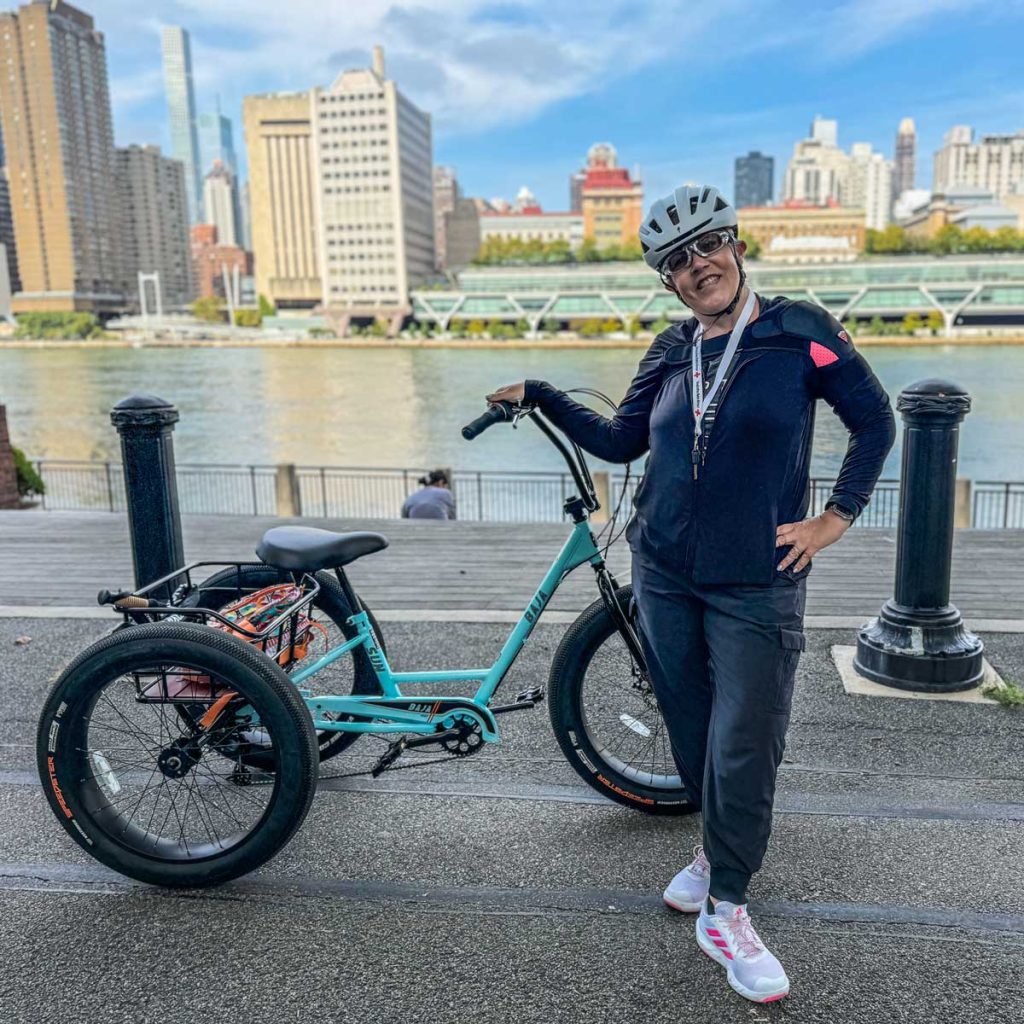 Michelle’s story is one of resilience, and she hopes it will inspire other veterans with traumatic brain injuries to find the support they need. “It would be great for other veterans to know there are ways to overcome your obstacles,” she said. Through Hope For The Warriors and her determination, Michelle has shown that with the proper support, even the most demanding challenges can be overcome. Her journey serves as a reminder that no matter how hard the road may be, there is always hope.
HOPE is here to help YOU on your journey
Well-being is the state of being comfortable, healthy, or happy. It includes having good mental health, life satisfaction, a sense of meaning or purpose, and managing stress.
Hope For The Warriors functions from Six Domains of Well-Being: financial wellness, life roles, physical wellness, emotional wellness, social support, and community connection. We understand that many factors impact a service member and their family’s lives, so we take a holistic approach to well-being.
The mental health of veterans and the entire family is woven into every aspect of our well-being model. Through this model, we restore a foundation of stability, strength, and community for military families.
Click here to learn more about what HOPE can offer you!